Cardboard displays: marketing tips to promote merchandise

Staff Cart-One 19/06/2026 0

Cardboard displays are quite common in large-scale retail, and their role is essential in enhancing products on offer or promoting their launch.

Are they effective in boosting sales? In reality, displays are capable of stimulating the consumer's desire to purchase.

How is a cardboard display made?

Cardboard displays can come in various sizes and heights. They can be designed with one or more compartments for product display. 

The graphics of the display can be fully customized to create a showcase that seamlessly integrates with the product packaging to showcase it at its best.

There are different types of displays:

Floor displays: they maximize vertical space and help reduce overall bulk.

Counter displays: they are indispensable for maintaining order on horizontal surfaces.

When are cardboard displays needed?

Cardboard displays can be used to set up dedicated corners within shops and supermarkets, making it possible to showcase special offers or promote brand-new products. 
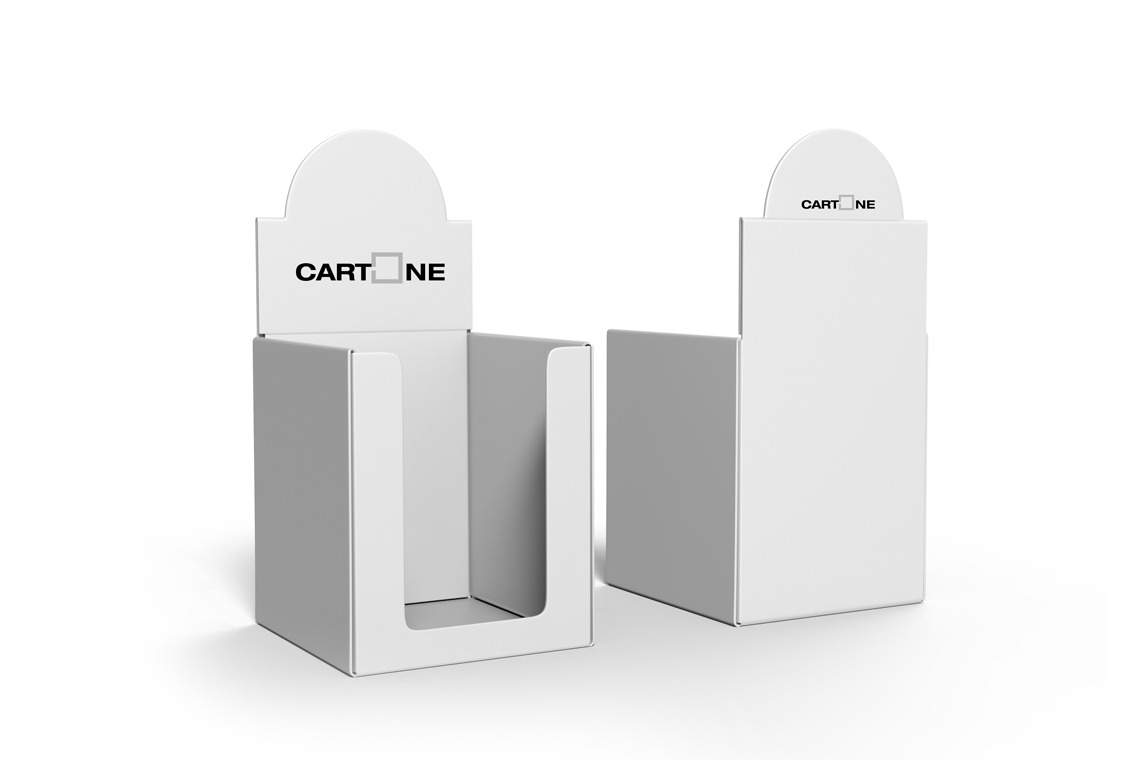
Die-cut Cardboard Displays

Cardboard displays are also a fundamental resource for setting up trade show stands. This makes it easier to optimize spaces by utilizing them vertically. 

In this case, the displays can include shelves and brochure holders, which not only give visibility to the product but also allow visitors to independently gather information and advertising material to find useful details.

What is a cardboard display for? Discover its functions.

As mentioned at the beginning, the display creates a showcase that isolates the product from its surrounding context. This allows the potential buyer to distinguish any given item from similar ones.

The strategy is to intrigue the potential buyer so that they are guided toward completing the purchase. A floor display, for example, allows consumers to have the goods at the perfect height. The customer will have the opportunity to pick up the product, hold it in their hands, and compare different variants of the same item if displayed together. 

This allows for greater interaction compared to the traditional shelf where options multiply, meaning consumers are not always inclined to try new products; instead, they are more driven, precisely through packaging recognition, to choose the most familiar one.

This journey can be further encouraged by highlighting price information or by reporting news and benefits that can come from its purchase. 

Discover CART-ONE solutions to create your custom displays. Contact us for more information and to get a quote that meets your needs.

You may also like...

Staff Cart-One 19/06/2026

How to carry out separate collection for paper and cardboard (without mistakes!)
Paper and cardboard are materials that cannot be wasted. Their recycling brings numerous advantages at an industrial, but also environmental level. Recycling, in fact, means recovering precious raw material for the creation of new cellulose-based products. The environmental benefits are evident, especially regarding a more effective management of forest resources, applying better strategies for the protection and safeguard of ecosystems to the benefit not only of flora, but also of native fauna, so as to best preserve biodiversity. One fact is clear: the destruction of habitats and the compromise of forest ecosystems have forced wildlife into closer contact with humans and domestic, farm, and companion animals. This factor should not be underestimated because it is what opened the doors to the proliferation of new viruses, some of which are capable of causing global epidemics. What can each individual do? Recycling has a fundamental social importance: for this reason, new generations must increasingly adopt the mindset of a sustainable and “zero waste” lifestyle. This policy must also be supported through consumer choices, meaning by rewarding those companies that operate within the framework of circular and sustainable production. Each individual also bears a great responsibility regarding daily actions, such as conducting a mindful separate waste collection. Very often, attention is focused only on the characteristics of the material: if it looks like paper, then we throw the waste into the paper collection bin. Obviously, this is just one of the mistakes that can be made when recycling packaging. Let's see in practice how to encourage separate collection while avoiding compromising its effectiveness and ensuring that materials are properly sent for recycling. How to carry out the separate collection of paper and cardboard? When we need to separate paper or cardboard, we must be careful to pay attention to some fundamental aspects to ensure that waste is accepted into the recycling chain. How to deposit paper and cardboard for collection? If door-to-door collection is carried out, it is necessary to place the paper in a specific bag. Larger boxes must be reduced into smaller pieces or folded over themselves. If the paper is to be deposited at a public drop-off container or other public bin designated for collection, paper and cardboard must always be placed inside, without any other wrapping. Do not insert plastic bags or bags made of other materials, unless required by municipal regulations. Avoid leaving cardboard boxes outside, as they could get dirty, wet, and therefore degrade before being sent for recycling. How should paper packaging be before being thrown away? Generally, cardboard packaging is clean, whether it is a delivery box received from an e-commerce platform or a morning breakfast cereal box. But how do you recycle paper or cardboard that comes into contact with food? Let's look at a practical example, perhaps the most common case of all: takeaway pizza boxes. As a general rule, greasy paper or paper with food residues cannot be sorted into the paper collection. If municipal regulations allow it and the box bears the appropriate indication, food cardboard boxes can also be disposed of with organic waste. But what happens if the pizza box has an aluminum foil lining inside? Multi-material laminated materials are a true challenge for the recycling market. If your local pizzeria uses this type of box, it is helpful to know that with a little patience, you can separate the film from the cardboard itself, allowing you to place the entire box into the paper collection. Cardboard used to protect floors, for instance during wall repainting, cannot be thrown into the paper collection. This applies to all materials that come into contact with solvents and potentially toxic substances. Baking paper, tissues, and more: here are the most controversial materials Another doubt that often troubles individual citizens concerns tissues: can they be discarded in the organic waste collection or not? The answer is negative: tissues, despite being cellulose-based, cannot be thrown into the organic waste if they have been used. While wax papers, which often contribute to creating packaging for fresh food, cannot be recycled, baking paper deserves a separate discussion. Originally, this type of paper, once used, also had to be destined for the residual or unsorted waste collection. Increasingly, however, companies are producing biodegradable solutions that can be thrown into the organic waste after use. In this regard, it is recommended to always check the instructions on the packaging. Receipts cannot be disposed of with paper and cardboard, as they are made with thermal paper. Tape, staples, and ribbons: what to do when packaging features these details? Only clean paper and cardboard must be placed in the paper collection. In the case of moving house or purchasing appliances like air conditioners, you may find cardboard packaging with metal staples reinforcing the corners. To place the folded cardboard into the separate collection, you must remove these staples. If this operation proves difficult, it is best to cut the cardboard near the staples so that all the rest can be recycled. Adhesive tape is an enemy to paper and cardboard: remember to always remove it from boxes before throwing them away. A wide variety of new products are made from recycled paper and cardboard, ranging from corrugated cardboard packaging to stationery items and much more. Recycling also means supporting our country's economy through resource optimization and the savings resulting from purchasing new raw materials, which can be replaced, precisely, by recovered materials.
Read more

Staff Cart-One 17/06/2026

US tariffs: impact on agri-food and packaging
The Italian agri-food sector looks with growing concern at the possible introduction of new customs tariffs by the United States, a measure that could heavily penalize Made in Italy exports and have direct repercussions on the food packaging supply chain as well. US tariffs: impact on agri-food and packaging. Italy, with over 67 billion euros in agri-food exports in 2024, recorded an 8% growth compared to the previous year, confirming its position among the main exporting countries in the world. However, the hypothesis of new US tariff barriers risks slowing down this positive trend. Read also: “New CAC 2025 rates: what changes for paper, wood, glass, and plastic” Why US tariffs worry Italy According to Denis Pantini, Head of Agri-Food at Nomisma, the additional tariffs are part of a strategy to rebalance the American trade balance, which has long been in deficit towards the European Union. The deficit exceeds 200 billion dollars for goods, although it softens when considering the trade of services. Right in the crosshairs could end up Italian agri-food products, which are the most exposed to exports towards the US among all EU countries, with a share of 12% of the total value of sector exports. The Italian products most at risk of tariffs Many of the symbolic products of the Made in Italy agri-food sector depend significantly on the US market. Among the most exposed we find: Cider (72%), Pecorino Romano and Fiore Sardo PDO (57%), White wines from Trentino-Alto Adige and Friuli Venezia Giulia (48%), Toscana red wines PDO (40%), Extra virgin olive oil (32%), Vinegars (30%), mineral waters (28%), and also Parmigiano Reggiano and Grana Padano (17%). These are significant percentages, which make it clear how closely Italian agri-food exports are tied to the American market. The most exposed Italian regions The economic consequences will not be distributed evenly. Some Italian regions, particularly in Central and Southern Italy, risk greater impacts. Sardegna is the most vulnerable: it produces over 90% of Pecorino Romano PDO and sends 49% of its agri-food exports to the United States. Followed by Toscana, where oil represents 42% of exports towards the US and wines 33%. Lazio also exports 58% of its olive oil to the US, while Abruzzo sends 28% of its pasta and bakery products. In Campania, 26% of wine exports are destined for the American market. Packaging for export: a strategy to react to tariffs In the midst of this uncertain scenario, food packaging can play a key role in facing the changes imposed by the international context. Rethinking packaging becomes a priority. Investing in sustainable, efficient packaging optimized for logistics means reducing costs, increasing product attractiveness, and adapting more easily to alternative markets. Smart packaging helps businesses position themselves better even in contexts where competitiveness is played out on details such as traceability, food safety, aesthetic appeal, and environmental impact. Cart-One alongside agri-food businesses In a market increasingly influenced by geopolitical and commercial factors, Cart-One proposes itself as a strategic partner for Italian companies, offering customized and export-ready packaging solutions. Our corrugated cardboard boxes, studied for the needs of the agri-food sector, meet international standards and are designed to enhance every product with efficiency, aesthetics, and sustainability. Do you need a more competitive, sustainable packaging ready to overcome new barriers? Cart-One is ready to accompany you with tailor-made solutions for the Italian agri-food sector of today... and tomorrow. Contact us for more information. See also: “Sustainable packaging: what influences Italian consumers' purchases”
Read more

seo 19/06/2026

Shipping boxes: how to choose them according to the products
When you need to ship any goods, you need to get the right box and packaging. Tin, objects, fragile goods, products for Food & Beverage distribution must be properly packaged to preserve their integrity. During transport, in fact, the goods could be subject to compressions, vibrations (for example, those that occur in transport by road or rail), or to accidental blows during loading and unloading operations. To ensure that transport does not damage the content, it is necessary to pay attention to the type of box and the protections to be inserted inside, in order to improve the safety conditions during the transport and sorting of the product. What should the packaging box be like? Types and sizes The external packaging must be of quality, new and made with strong cardboard. You can choose between different types of corrugated cardboard, including American and die-cut boxes, based on the size and type of product. The differences between American and die-cut boxes are quite clear, so before choosing a product it is required to inquire about the best options. In addition, the size of the box must be commensurate with the product, so that no voids or spaces are created that could cause the packaging to fold; on the contrary, one must also be careful not to load the box too much, to prevent the bottom’s collapse. Always on the corrugated cardboard box it is always advisable to indicate whether the product transported is fragile or not, but this does not however exempt you from obtaining a robust and well-made packaging. Inside can be placed bubble wrap, dividers and polyurethane foam sheets to further protect the goods. For more delicate objects, it is possible to think of modular packaging in which one box is inserted into the other for greater protection. Once our box is composed, the latter must be properly sealed with a quality adhesive tape. Each product has its own shipping box The choice of the right box also passes through the type of product to be packaged, as we have mentioned several times. Glass bottles and tin containers If our company deals (for example) with the production of wine, we will have to adopt compliant, approved packaging that must be approved by the carrier who will transport it. The bottles, in fact, must be arranged inside the box in such a way that they are fixed and isolated from the bottom and from the side walls of the box in order to cushion and minimize the impact on the product. To transport aluminum tins, it is necessary to create packs that are not too heavy, to avoid that they are unloaded and loaded with difficulty and that therefore they can be accidentally damaged. Fragile objects For more fragile objects a two-flute corrugated cardboard box is needed, to better maintain rigidity, especially if the boxes are superimposed. If paintings or prints are sent, the first thing to do, before inserting the object in the appropriate box, is to block the glass with insulating tape, if present. Also insert corner covers, so that the edges of the frame do not damage the box and at the same time are protected from knocks. Electronic items Even for electronic items such as PCs, mobile phones and other products already boxed, it is mistakenly believed that the original packaging is sufficient to protect the product. In fact, it is always better to insert the product in an additional packaging box, which can withstand the various loading and unloading operations, so as not to ruin the original packaging and at the same time to preserve the goods from damage. Furniture and furnishings Furniture and furnishings can be placed on pallets and duly wrapped in ad hoc films and packaging or in approved boxes. Paper material For paper products (such as books, folders, brochures, documents, etc ...), CDs and vinyls and other types of products that may be affected by humidity, it may be useful to use a transparent film before depositing the product inside a punched cardboard box. The product can, at a later time, be placed in another box. The importance of careful packaging: final considerations As we have seen so far, careful packaging is essential for getting your goods to their destination intact. In summary, the first step is to get a box that is suitable for our needs and that is suitable for the automation line, or that is easy and quick to work manually. The box must be accompanied by the right internal packaging, so as to further cushion vibrations and blows by providing the right support and adequate protection. Finally, in the case of specific products, it is necessary to use approved packaging, internal dividers and additional protective layers to allow the transporter to carry out his work safely.
Read more

Cerca...