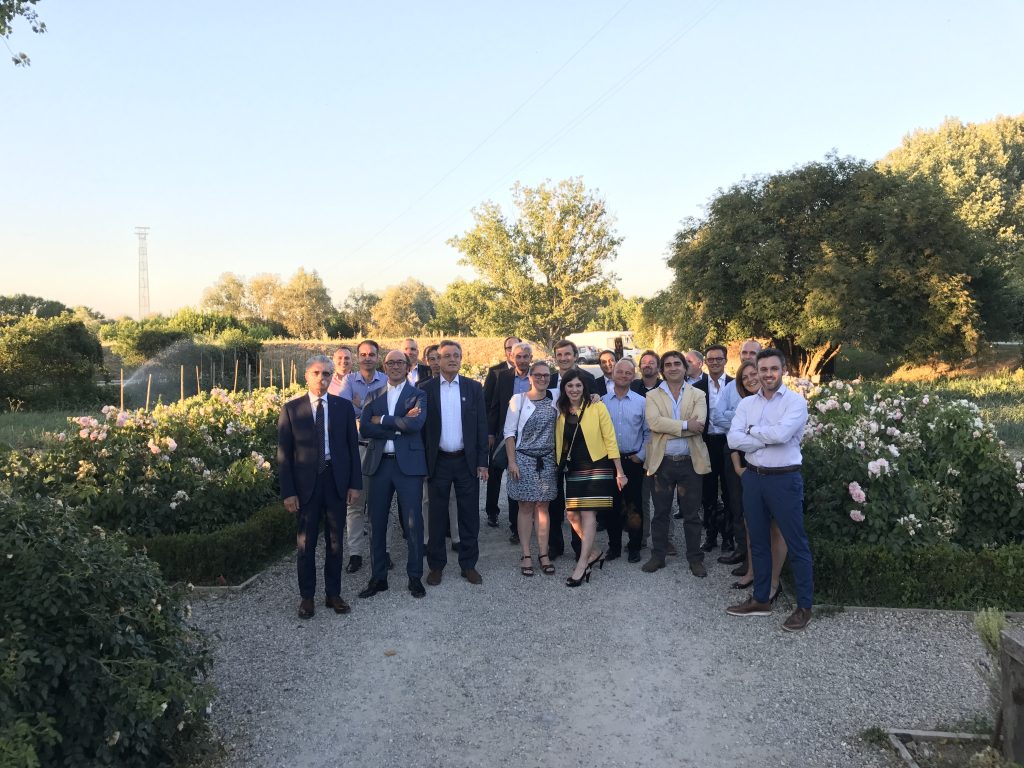
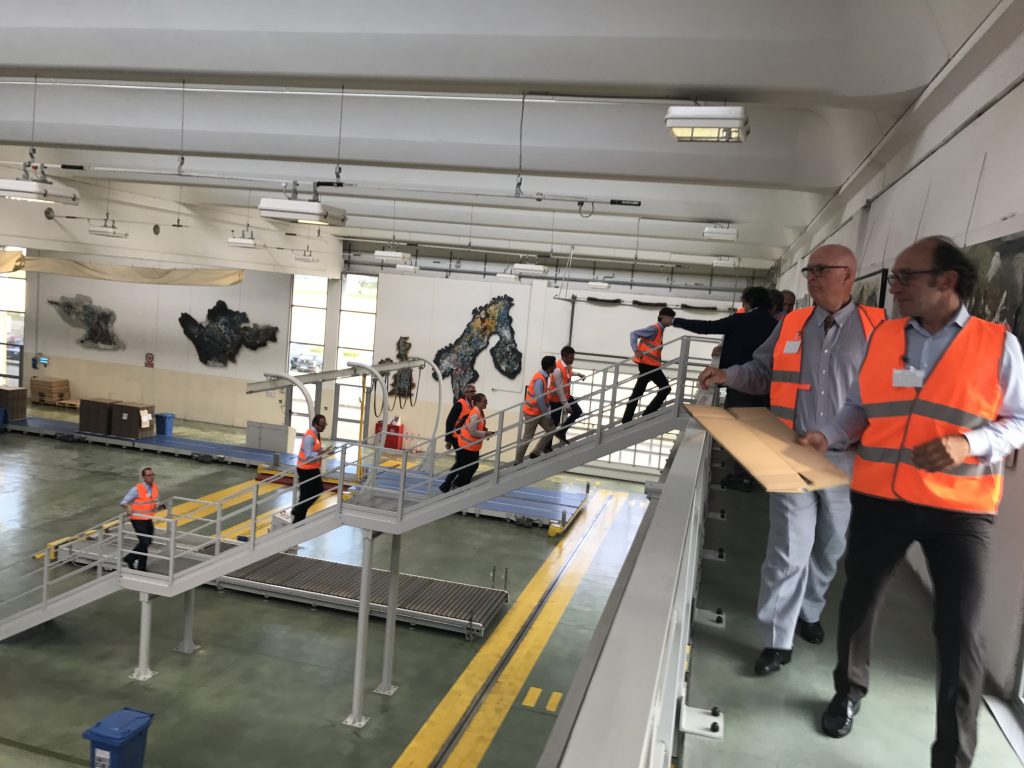
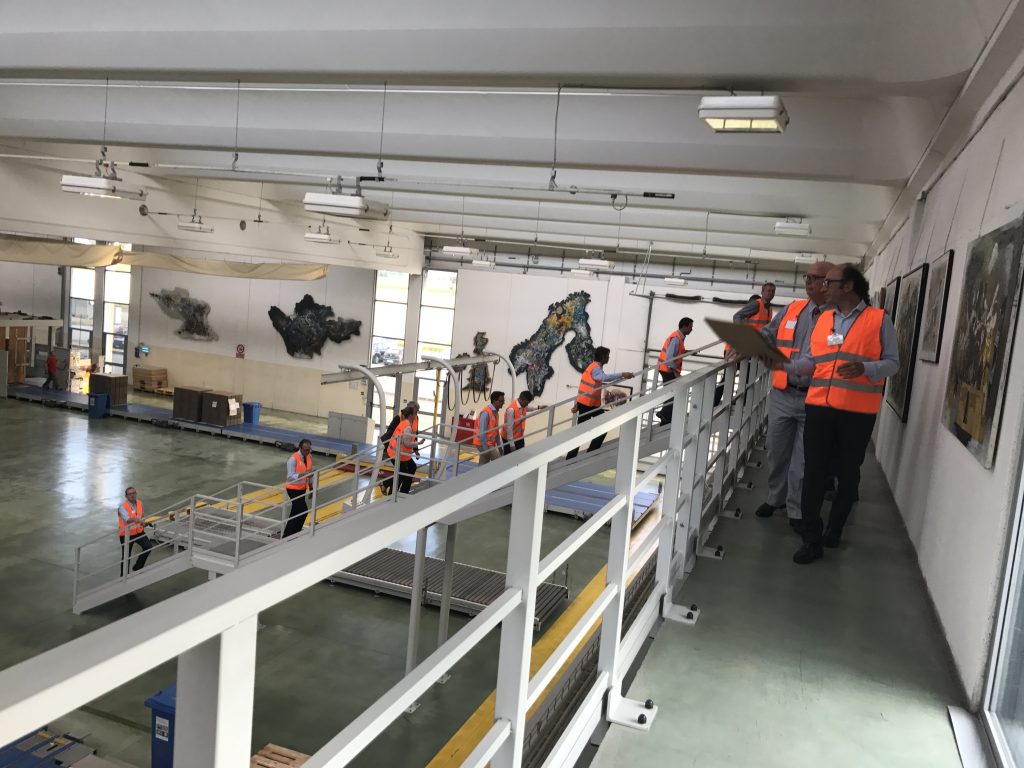
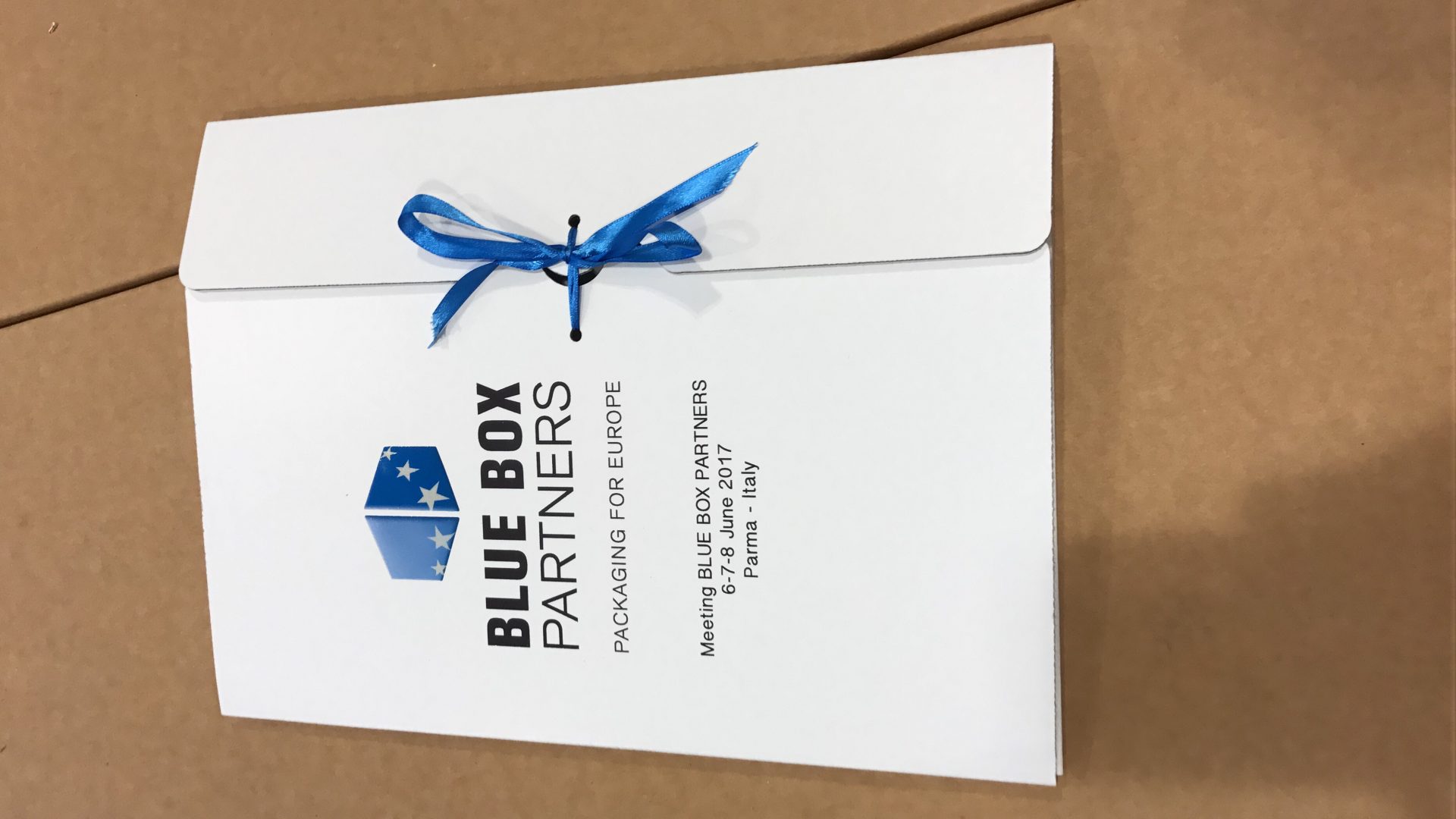
Italy hosts BBP annual meeting in Parma
You may also like...
Staff Cart-One 18/06/2026
No compromises in Europe on the packaging regulation: the Italian stance
The PPWR risks undermining the core success of a decade of measures aimed at limiting plastic in the EU and flooding the market with plastic packaging.
No compromises in Europe on the packaging regulation: the Italian stance. The European packaging proposal presents numerous shortcomings, regarding which the Italian stance is clear, as highlighted by the opinion approved by the Chamber's Environment and Productive Activities Committees. Let's find out all the details in the rest of the article. Read also: “Reducing the environmental impact of packaging: what Europe mandates”
What Europe states regarding packaging management
The current draft of the European regulation imposes packaging management rules horizontally across all member states, without considering the history and current functioning of their respective systems. The Federation's position is clear: “It is a short-sighted choice that overlooks, in Italy's case, the excellence of paper recycling and beyond. All of this is done without a credible impact assessment on individual materials and their respective supply chains”. The Federation therefore appeals to all decision-makers “not to give in, under pressure dictated by the approaching end of the European legislative term, to the rush of closing such a significant dossier without reflecting on all the possible implications for the smooth operation of the circular economy”.
The Italian stance on the packaging regulation
The amendments recently presented to the PPWR risk undermining the core success of a decade of measures aimed at limiting plastic in the EU and flooding the market with plastic packaging. If implemented, they would completely contradict the goals of the Green Deal, the Circular Economy Action Plan, and the ongoing negotiations for an international plastics treaty:
mandatory reuse targets for transport packaging will benefit plastic packaging and penalize the most recycled of all packaging materials: paper;
mandatory reuse targets would ruin the European corrugated cardboard industry;
mandatory reuse targets offer no guarantee of environmental benefits: reuse and recycling are complementary.
A market of plastic packaging
Italy supports the goals of the PPWR, but mandatory reuse targets for all packaging materials will inevitably authorize the creation of a massive amount of plastic trays at the expense of other more sustainable packaging materials. Cardboard and plastic cannot compete fairly when it comes to mandatory reuse. Plastic is a lightweight, durable material, yet difficult to recycle and hazardous to health and ecosystems, whereas cardboard is a fully renewable material, highly recycled, and biodegradable, making it less suited for continuous reuse. Including cardboard in all reuse targets completely contradicts EU efforts to restrict plastic waste, would increase the volume of circulating plastic packaging, and establish a “plastic monopoly” over certain market segments.
A threat to the Green Deal
This stands in total contradiction to the objectives of the Green Deal, the Circular Economy Action Plan, and the ongoing negotiations for an international plastics treaty. A resurgence of plastic would represent a threat to the Green Deal. It contradicts the EU Circular Economy Action Plan, which states that all packaging in the EU should be reused or recycled in an economically sustainable manner by 2030. It would jeopardize recent successes in reducing plastic waste, such as the Single-Use Plastics Directive. Boosting plastic packaging makes no sense at a time when the global community is negotiating a historic agreement to reduce plastic pollution.
Paper will be penalized
Mandatory reuse targets will favor plastic packaging and penalize the most recycled packaging material: paper. With a recycling rate exceeding 80%, corrugated cardboard is the most recycled packaging material, and the industry is committed to an ambitious decarbonization roadmap. The paper recycling market is effective and represents the model that the EU should encourage others to follow. Highly recycled and renewable materials like paper-based packaging are inherently unsuited for multi-rotation reuse. There would be a shift from the most recycled packaging material to plastic alternatives capable of meeting the rotation demands of reuse systems, with no overall environmental benefit.
Thousands of fewer jobs
Mandatory reuse targets would ruin the European cardboard industry. Replacing cardboard with plastic packaging through reuse systems would lead to the loss of thousands of jobs in local communities across Europe where cardboard manufacturers are based. We employ 100,000 people directly, create another 270,000 jobs indirectly, and generate 25 billion euros a year in sales to the benefit of local communities where most of our factories are located, often in underdeveloped areas.
No guarantee for the environment
Mandatory reuse targets offer no guarantee of environmental benefits: reuse and recycling are complementary. Recycling and reuse both have a role to play in packaging circularity and should complement each other. Reuse systems should be deployed where they benefit the environment, economy, and society. Corrugated cardboard packaging systems outperform reusable plastic crates in 10 out of 15 environmental impact categories, including CO2 emissions and water consumption (peer-reviewed LCA). Reusable plastic crates must be reused at least 63 times to be environmentally sustainable (peer-reviewed LCA).
Corrugated cardboard is the most recycled in Europe
With a recycling rate higher than 80%, corrugated cardboard is the most recycled packaging material in Europe. Forcing us to reuse our boxes instead of pulping them and making new ones will drive us out of the market despite our huge economic and social contribution. The ambitious commitments of the corrugated cardboard industry's decarbonization roadmap render such reuse mandates unnecessary:
The gap will be filled by plastic, which is easier to reuse, though at a heavy cost to the planet due to the increased use of fuel, transport, and detergents. Plastic does not decompose easily, so when bottles, wraps, or crates reach the end of their lifecycle, they remain in our environment virtually forever;
We all look forward to less waste. But among all packaging materials, cardboard is the model that the EU should make others follow.
We want steps forward, not backward
Over 80% of our cardboard is recycled, the highest figure among all packaging materials. We back the PPWR, but to sustain this level and go further, we need rules that do not force us to reuse our packaging instead of recycling it. Reuse and recycling are complementary for packaging circularity, and mandatory reuse targets make no sense for corrugated cardboard and cartonboard. The PPWR must respect these differences if it wishes to bring real improvements to the environment. Forcing us to apply mandatory reuse targets to cardboard instead of recycling it is like trying to fit a square peg into a round hole. It will not work and would turn back the clock on Europe's environmental goals. It also contradicts the EU Circular Economy Action Plan, which requires packaging to be reusable or recyclable in an economically sustainable way by 2030. The PPWR's goals are laudable and we share them, but their unintended consequences could ruin our business. Mandatory reuse targets would inevitably benefit plastic packaging and wipe out the impressive strides we have made in cardboard recycling. This would result in a greater release of CO2 into the atmosphere, not the opposite. See also: “Recycled paper and recyclable paper: the differences between the two processes”
Read more
Staff Cart-One 19/06/2026
Rise in raw material prices
The Covid-19 pandemic has substantially changed our purchasing habits and people's freedom of movement, requiring many businesses to adapt their services to remain competitive on the market.
With successive lockdowns over time, several companies have had to reinvent themselves in some way: just think, for example, of the catering sector, which found itself with the sole option of selling its specialties through takeaway and home delivery.
E-commerce, on the other hand, experienced a surge in requests at a time when shopping was not easy to secure various types of products, from groceries to technology, always at the best prices.
What are the effects of the pandemic on the production sector?
In the long run, this health emergency situation turned into a production emergency. In fact, the price of raw materials is rising, with a substantially significant impact on the cost of the final product.
A striking example is waste paper, which went from an estimated 11 euros per ton in February 2020 to the current 140 euros per ton. Pure cellulose has also recorded a significant increase.
In addition to the higher demand for packaging products within the paper sector, especially from the pharmaceutical and food sectors, we also note a difficulty in sourcing raw materials.
The climate of uncertainty has triggered a rush for supplies that is forcing recycled paper suppliers to reduce their production capacity.
An increase is also recorded in the costs of the finished product, as these factors have forced paper mills to raise their prices by 5% to 10%.
The price increase does not only affect paper, but also plastic, wood, copper and, in the food sector, wheat.
Why does the crisis in the packaging sector affect all production sectors?
It is impossible to think of a product without packaging: the latter is an integral part of a supply chain. Indeed, packaging is fundamental for various sectors, such as Food & Beverage, pharmaceuticals, and industry.
The increased demand for corrugated cardboard boxes is also correlated with the growth of e-commerce.
Demand has increased for products that allow for easy and safe transport. Paper weight and its resistance are the most sought-after characteristics.
What are the effects of price hikes on packaging paper?
Unfortunately, price tensions regarding waste paper and other materials contribute to increases in the cost of the final box and intermediate products.
This price hike then translates into a general increase in prices, which are passed on to the final consumer, affecting the product's competitiveness and also impacting its shelf life.
We must not forget that the pandemic has also reduced the purchasing power of many people, so a sequence of price hikes could make a product less appealing and limit or cancel its purchase, especially if it is non-essential goods.
Intervention is needed to ensure that the paper sector maintains a sustainable production that can remain competitive. This is the challenge facing the Italian market, so that it can maintain a high level of quality and accessible costs.
The hope is that the holiday months themselves will act as a driving force for the recovery of consumption, making paper for recycling more available and mitigating the prices of waste paper.
Read more
Staff Cart-One 17/06/2026
US tariffs: impact on agri-food and packaging
The Italian agri-food sector looks with growing concern at the possible introduction of new customs tariffs by the United States, a measure that could heavily penalize Made in Italy exports and have direct repercussions on the food packaging supply chain as well. US tariffs: impact on agri-food and packaging. Italy, with over 67 billion euros in agri-food exports in 2024, recorded an 8% growth compared to the previous year, confirming its position among the main exporting countries in the world. However, the hypothesis of new US tariff barriers risks slowing down this positive trend. Read also: “New CAC 2025 rates: what changes for paper, wood, glass, and plastic”
Why US tariffs worry Italy
According to Denis Pantini, Head of Agri-Food at Nomisma, the additional tariffs are part of a strategy to rebalance the American trade balance, which has long been in deficit towards the European Union. The deficit exceeds 200 billion dollars for goods, although it softens when considering the trade of services. Right in the crosshairs could end up Italian agri-food products, which are the most exposed to exports towards the US among all EU countries, with a share of 12% of the total value of sector exports.
The Italian products most at risk of tariffs
Many of the symbolic products of the Made in Italy agri-food sector depend significantly on the US market. Among the most exposed we find:
Cider (72%), Pecorino Romano and Fiore Sardo PDO (57%),
White wines from Trentino-Alto Adige and Friuli Venezia Giulia (48%),
Toscana red wines PDO (40%),
Extra virgin olive oil (32%),
Vinegars (30%), mineral waters (28%),
and also Parmigiano Reggiano and Grana Padano (17%).
These are significant percentages, which make it clear how closely Italian agri-food exports are tied to the American market.
The most exposed Italian regions
The economic consequences will not be distributed evenly. Some Italian regions, particularly in Central and Southern Italy, risk greater impacts. Sardegna is the most vulnerable: it produces over 90% of Pecorino Romano PDO and sends 49% of its agri-food exports to the United States. Followed by Toscana, where oil represents 42% of exports towards the US and wines 33%. Lazio also exports 58% of its olive oil to the US, while Abruzzo sends 28% of its pasta and bakery products. In Campania, 26% of wine exports are destined for the American market.
Packaging for export: a strategy to react to tariffs
In the midst of this uncertain scenario, food packaging can play a key role in facing the changes imposed by the international context. Rethinking packaging becomes a priority. Investing in sustainable, efficient packaging optimized for logistics means reducing costs, increasing product attractiveness, and adapting more easily to alternative markets. Smart packaging helps businesses position themselves better even in contexts where competitiveness is played out on details such as traceability, food safety, aesthetic appeal, and environmental impact.
Cart-One alongside agri-food businesses
In a market increasingly influenced by geopolitical and commercial factors, Cart-One proposes itself as a strategic partner for Italian companies, offering customized and export-ready packaging solutions. Our corrugated cardboard boxes, studied for the needs of the agri-food sector, meet international standards and are designed to enhance every product with efficiency, aesthetics, and sustainability. Do you need a more competitive, sustainable packaging ready to overcome new barriers? Cart-One is ready to accompany you with tailor-made solutions for the Italian agri-food sector of today... and tomorrow. Contact us for more information. See also: “Sustainable packaging: what influences Italian consumers' purchases”
Read more